Some mornings, your body is awake but your brain hasn’t joined the meeting.
You read the same line twice. Small jobs feel bigger than they should. By the end of the day, you’ve got nothing left for the people and things you care about.
That’s why nootropic mushrooms have gained so much attention.
But what can they really do? And why does Rise use seven of them?
The Simple Answer
A nootropic is something used to support the brain.
Some mushrooms contain natural compounds that researchers are studying for focus, energy, stress, brain health, and immune health.
Think of Rise’s seven mushrooms like players on a team. They don’t all do the same job. Each one brings something different to the field.
The goal isn’t just to get more done. It’s to think more clearly, use your energy well, and still feel like yourself later.
What Makes Mushrooms So Interesting?
Mushrooms are much more than food.
They contain special fibers called beta glucans. Think of these fibers like part of the mushroom’s frame, much like the beams inside a house. Researchers are studying how they speak to immune cells and other parts of the body.
Some mushrooms also contain compounds that are being studied for the brain, stress, and how the body makes and uses energy.
That doesn’t mean every mushroom has been proven to sharpen your mind. Human research is still small for many of them.
Still, there are good reasons to keep learning.
Meet the Seven Mushrooms in Rise
Lion’s Mane: The Brain Mushroom
Lion’s mane gets the most attention for focus and brain health.
Small human studies suggest it may support some parts of thinking and may help with feelings of stress. Researchers are also studying how its natural compounds may support nerve cells.
Why does that matter?
Clearer thinking can mean less time feeling stuck. It may help you move through work with more ease, then leave that work behind when the day is done.
Cordyceps: The Energy Mushroom
Cordyceps is studied for the way the body uses oxygen and energy during activity.
Some small human studies found possible gains in exercise performance. Other studies haven’t found the same results. The pilot trial linked below used a cordyceps containing mushroom blend, so it cannot isolate the effect of cordyceps alone.
The real life goal isn’t endless energy. It’s having enough fuel to move your body, handle your day, and still have something left for your evening.
Reishi: The Steady Mushroom
Reishi is often linked with calm, stress support, and immune health.
Human research is limited, but one study found that beta glucans from reishi changed some immune markers in healthy adults.
That study did not measure whether people felt calmer. Feeling less pulled in every direction is a meaningful goal, but immune markers cannot tell us whether reishi helps someone pause, think, and respond with less stress.
Turkey Tail: The Defence Mushroom
Turkey tail is rich in compounds studied for immune activity.
Most human research has been done in special medical settings. This means we can’t say it prevents illness or produces the same results in healthy people.
Still, immune health matters. When life knocks you off course, it can take your time, energy, and attention with it.
Shiitake: The Everyday Support Mushroom
Shiitake is a food mushroom with beta glucans and other helpful nutrients.
In one small human study, eating dried shiitake each day changed several immune markers. That’s interesting, but it doesn’t prove that every shiitake product will have the same effect.
Chaga: The Protection Mushroom
Chaga contains compounds that can act as antioxidants in lab tests.
Antioxidants help protect cells from everyday wear. Think of them like a cleanup crew that helps deal with some of the mess made during normal life.
Most chaga research is still from lab and animal studies. We don’t yet know how much of that benefit carries over to people.
King Trumpet: The Food First Mushroom
King trumpet is a rich food mushroom with fiber and natural compounds.
Researchers are studying it for cell protection, brain health, and immune health. Most of this work is still in its early stages, so strong human claims would be too soon.
Why Put All Seven Together?
The idea is wider support.
Lion’s mane and cordyceps get most of the attention for thinking and energy. Reishi, turkey tail, shiitake, chaga, and king trumpet bring other areas of interest, such as stress, immune activity, and cell protection.
It’s like building a band. One instrument may carry the song, but the full group gives it more depth.
That doesn’t prove the seven mushrooms work better together. We still need human trials on complete blends.
It does explain why a blend may be more interesting than using one mushroom for one narrow goal.
Rise Is More Than Mushrooms
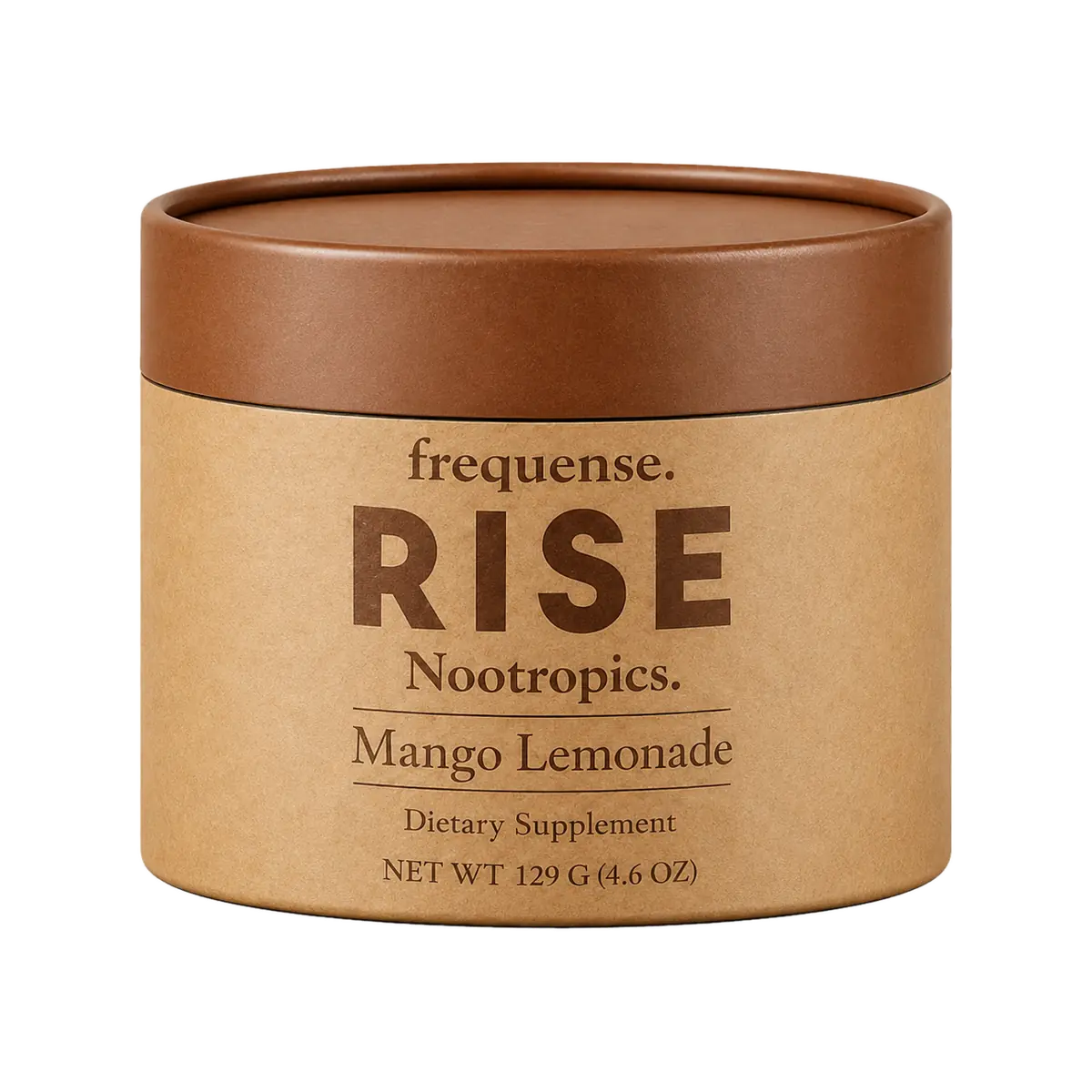
Rise is a full nootropic formula.
Along with its seven mushroom blend, standard Rise contains B vitamins, other nootropic ingredients, and 100 milligrams of caffeine from green coffee bean extract.
That matters because the lift someone feels soon after drinking Rise may come partly from caffeine. The mushrooms aren’t working alone.
Rise lists its full mushroom blend as 1 gram. Research using larger amounts of one mushroom can’t tell us exactly what the Rise blend will do.
That’s honest context, not a weakness. Good wellness choices start with knowing what’s in the cup and what the research can truly tell us.
What We Know
We know mushrooms contain useful fibers and other active compounds.
Small human studies have found promising results for lion’s mane, cordyceps, reishi, and shiitake. The areas studied include thinking, stress, exercise, and immune markers.
We also know the results depend on the mushroom species, the amount used, the way it was prepared, and the person taking it.
What We Don’t Know Yet
We don’t have strong human proof for every benefit linked to every mushroom.
We also don’t know if seven mushrooms together create a bigger effect than one mushroom alone.
Chaga and king trumpet need much more human research. Turkey tail research can’t be turned into broad claims about daily immune health.
Promising isn’t the same as proven.
The Bigger Picture
The best kind of focus doesn’t make you feel like a machine.
It helps you finish what matters with less mental drag.
The best kind of energy doesn’t push you until you crash.
It helps you move through your day and still have patience for dinner, a walk, a workout, a conversation, or a little time that belongs to you.
That’s the real reason nootropic mushrooms are worth exploring.
Not because they’re magic.
Because they may become one useful part of a stronger, clearer, more capable life.
Keep Exploring
SOURCES
Sources
- Chaga and oxidative DNA damage: laboratory study in isolated cells
- Official Frequense Rise product information
- Lion’s mane and mild cognitive impairment: human trial
- Lion’s mane, cognition, and stress: pilot trial
- Cordyceps containing blend and exercise: pilot trial
- Reishi beta glucans and immune markers: human trial
- Daily shiitake intake and immune markers: human study
- Turkey tail: phase one trial after breast cancer treatment
- King trumpet and learning: mouse study
This article is for education only. It isn’t medical advice and doesn’t replace guidance from a qualified health professional.